The Bionic 5K
My Role
Strategist
Partner
Sofia Bernitt (strategist)
THE ASK
Get people with physical disabilities to participate in the 2026 Bionic 5K in Cambridge.
THE CHALLENGE
Running races celebrate all athletes… or so most choose to believe. Everyday Adaptive Athletes feel like their movement is often defined by the expectations of others before they get the chance to define it for themselves.
THE SOLUTION
A campaign that celebrates the Bionic 5K as a space for self-defined athleticism, calling out clichés and inviting adaptive athletes to show up on their own terms.

THE CLIENT & GOAL
For many disabled individuals, movement is not exceptional, but a part of everyday life. Yet in mainstream culture, disability in sport is often framed through an inspirational lens that centers the viewer’s perception rather than the athlete’s lived reality.
This disconnect shows up at typical running events, where adaptive athletes often feel celebrated for “showing up” instead of being recognized for their athleticism. The result is a persistent gap between how adaptive athletes see themselves and how they’re perceived.
The Cambridge Bionic 5K is the race that brings together adaptive athletes, runners, and walkers of all abilities to celebrate technology, sport, and the human spirit.
Their goal: Increase attendance of amputee runners, walkers & rollers at the Cambridge Bionic 5k by 50%.
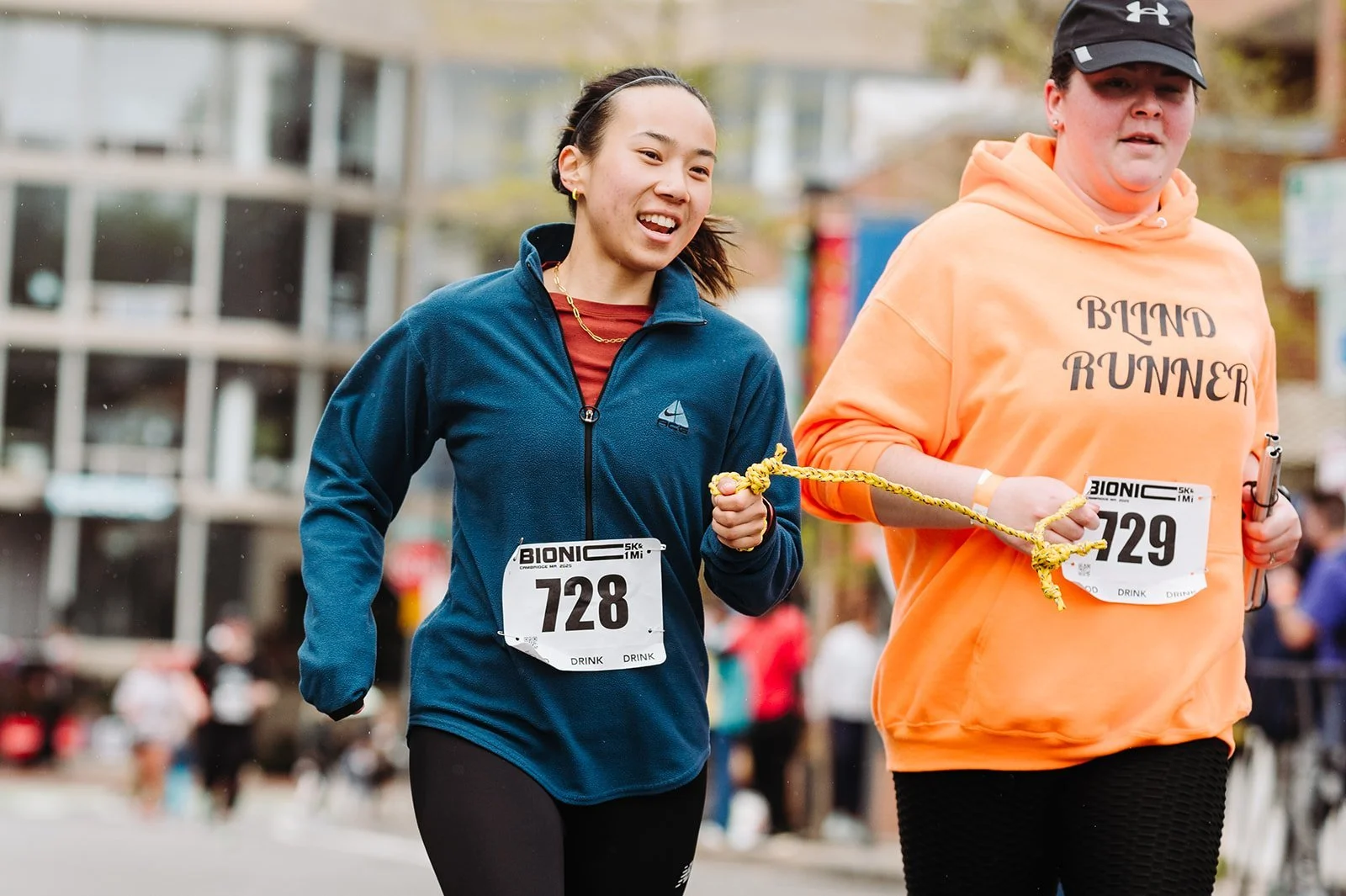
THE TARGET
Everyday Adaptive Athletes.
Disabled runners, walkers, and rollers aged 17–60 living in Greater Boston who make movement a regular part of their lives. They care deeply about it, as they value the sense of control, clarity, and consistency it provides. While movement is a familiar activity for them, community around it often isn’t. They’re hyper-aware of how quickly attention shifts from their athletic efforts to their disability, and they’re tired of being labeled as “inspiring” for doing something that’s simply routine to them. While they would like to be a part of broader running and fitness groups/events, they feel conflicted between winning against themselves, and having to win over the narrative that’s placed on them.
THE RESEARCH
Our testimonial analysis, social listening, and conversations with adaptive runners revealed a pattern of emotional truths:
Movement becomes a way to process life, emotion, and personal growth.
Every athlete has a deeply personal “why” behind their effort.
Adaptive athletes want to be recognized for skill, not framed as inspirational.
-
“It's more of a battle against myself than anything else.”
-
“13 years ago, I thought I was going to get my PhD in chemistry and I thought life was going one way. Then I had a stroke and it changed everything. But I can't say that it is regrettable. There are so many people that I have met that I wouldn't have met and things that I've done that I never would have done. If you just open your eyes, there's always something good.”
-
“Many [adaptive athletes] feel like they stand out when they attend majority-able-bodied events”
For many disabled individuals, movement is not exceptional, but a part of everyday life. Yet in mainstream culture, disability in sport is often framed through an inspirational lens that centers the viewer’s perception rather than the athlete’s lived reality.
The result is a persistent gap between how adaptive athletes see themselves and how they’re perceived.
THE CONSUMER PROBLEM
THE INSIGHT
Athletes shine brightest when cliché narratives aren’t there to steal their spotlight.
THE STRATEGY
The Bionic 5k is where individual “whys” fuel the collective wins.
Build a campaign centered around the personal motivations that push every athlete forward, and create a platform where those motivations can be expressed, shared, and celebrated.
THE MEDIA
-
Placements around Spaulding, rehab/physical therapy offices, MIT Media Lab, popular running trails in the greater Boston area. The goal is to bring the Bionic 5K to places were movement is already a lingering thought. These are spaces where both disabled and able-bodied people are active, further reflecting the inclusive nature of the event and normalizing disability within shared athletic spaces.
-
To extend the campaign through authentic storytelling and community engagement.
A content series featuring Bionic staff and athletes will highlight personal “whys” that bring them to the starting line.
Cross-posts will mirror OOH visuals for consistency.
“What moves you to move” social challenge will invite participants to share their own reasons/motivations before and after the race.
-
Stickers and flyers placed on accessibility features across Boston (ramps, handicap door buttons, handicap bathroom stalls, etc). To place our message in unexpected, yet familiar spaces that our audience interacts with on the daily. An engaging way to capture attention and use alternative creative elements/formats to ensure inclusivity for visually impaired individuals. The tactic reframes accessibility as part of everyday life, just like movement itself for the target audience.
-
Interactive activations to highlight the unique motivations that brought each participant to the race, and celebrate their collective wins at the finish line.
Pre-Race
When participants collect their racing bibs, they will be asked their “why,” to then be featured on a race-wide banner at the start line.
Post-race
“What moved you to move” content series to feature personal anecdotes about what pushed participants through their race.
THE (starting*) CREATIVE
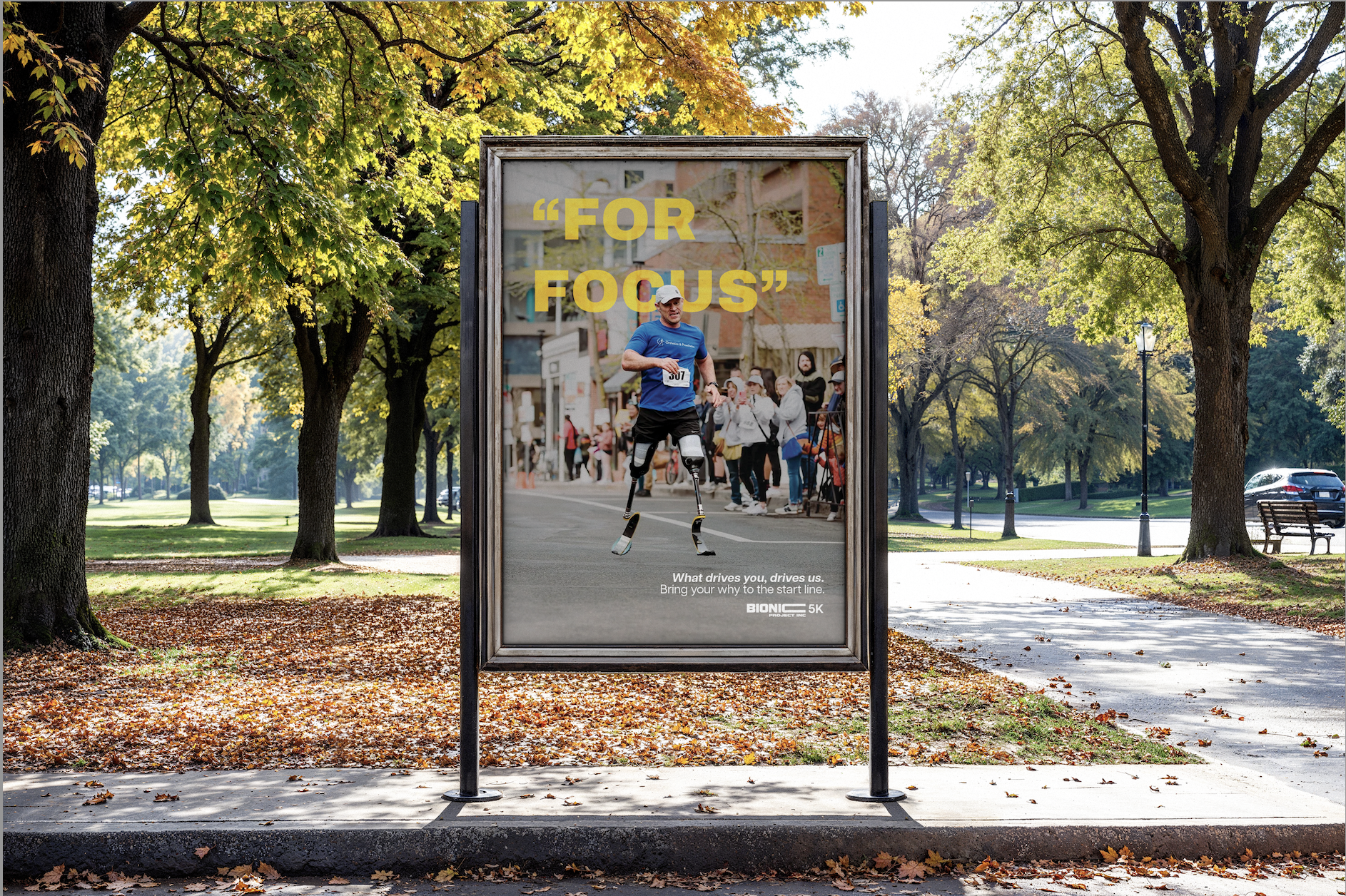
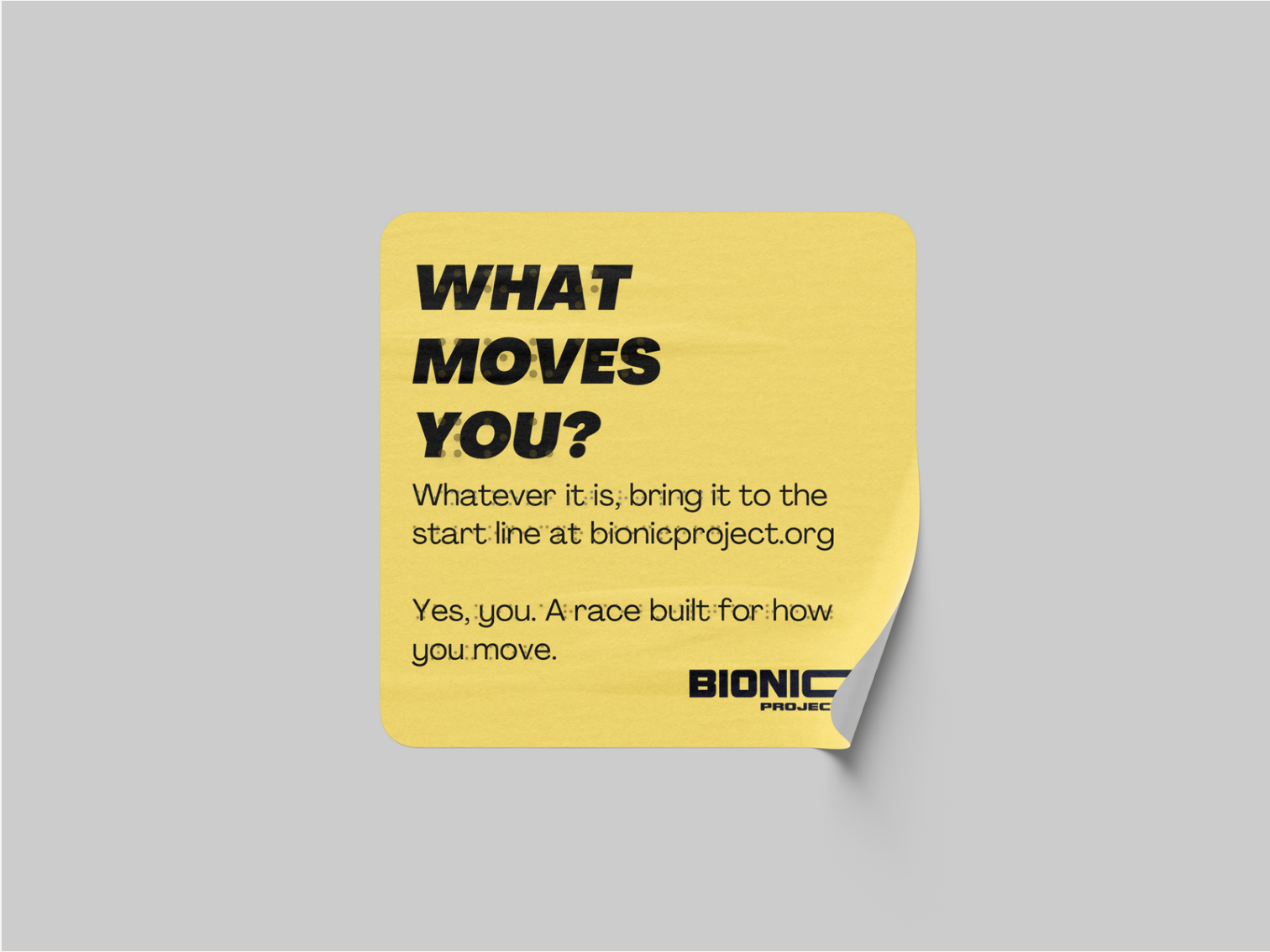
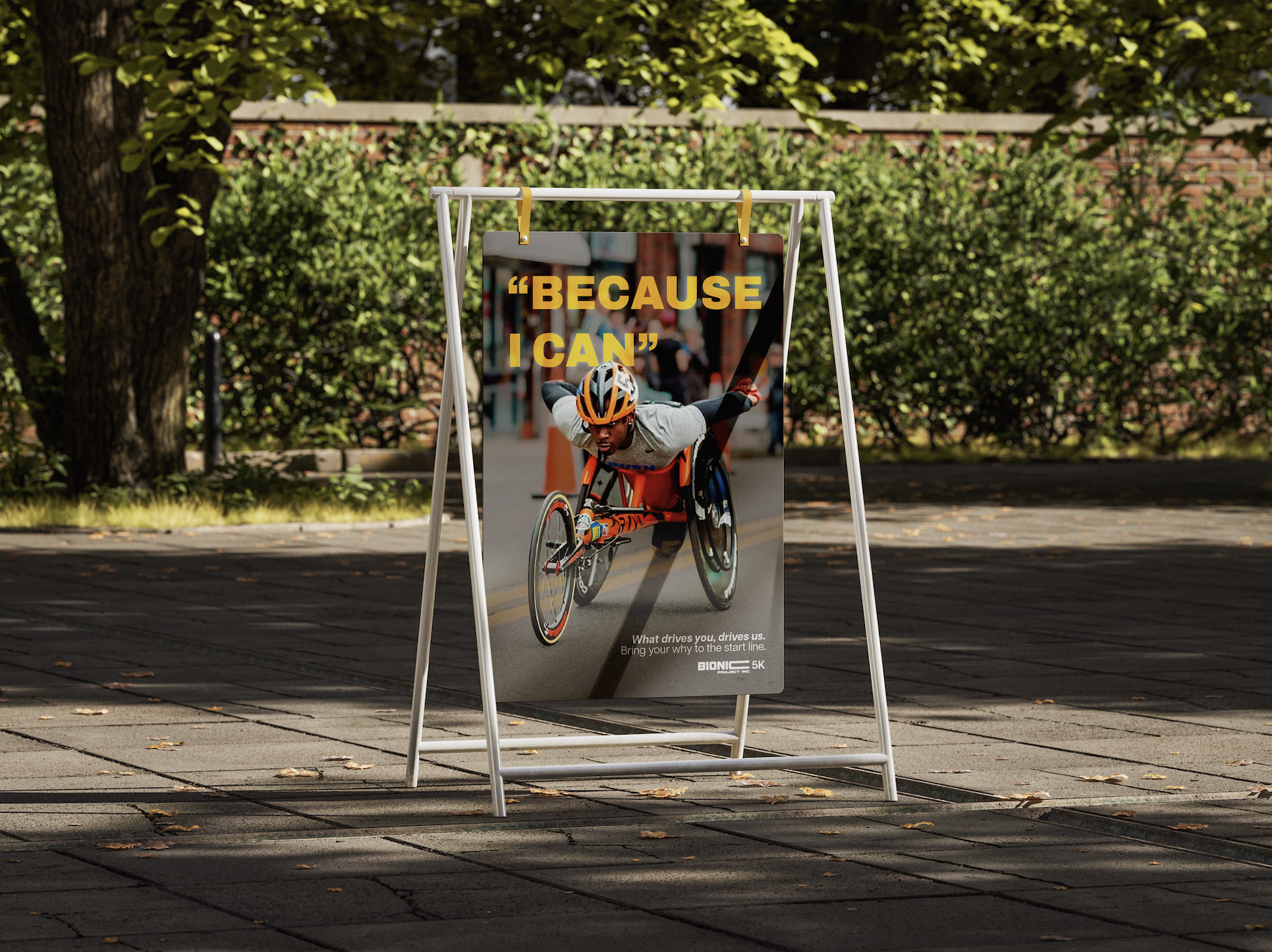
*creative exploration to test the brief.